In Grabbing Fog, Sophia Kim Apple—a trailblazing Korean American physician whose life was shaped by the poliovirus—emerges as a powerful new voice for women in medicine. This thought-provoking narrative continues the journey begun in her debut work inspired by real events, COVID‑19, weaving a deeply personal and medically rich story set against the backdrop of America’s twin pandemics: a global virus and a reckoning with racial injustice. The novel opens on the turbulent day of June 4, 2020, with a harrowing incident: A Black woman is injured during a protest following a volatile confrontation with her Hasidic Jewish roommate. What follows is an emotional unraveling of blame, fear, and fractured identities. Corpses fill refrigerated trucks on the streets of New York City. A shooting incident erupts inside a hospital, where a diverse group of physicians—immigrants and children of immigrants—hide, argue and fracture under the weight of fear and cultural trauma. Each of them bears the burden of history: the scars of discrimination, echoes of ancestral displacement, the heavy silence of being grouped as “other” among society. Dr. Apple deftly unites scientific fact with historical insight. She unearths forgotten moments and figures in medical history; she interrogates how science is interpreted, distorted and politicized—especially when tangled with race, fear, and personal greed.Grabbing Fog is more than a chronicle of medicine or a cultural autopsy of a nation in crisis. It is a spiritual meditation. She reflects on how Americans suffer a deficit of imagining the inner lives of other people. In our pursuit of certainty, we replace empathy with blame, and curiosity with fear. We cling to comfortable narratives, even if false, and reject inconvenient truths, even those whispered by God through suffering, science, and silence. This story is an urgent, lyrical call to resist chaos that drives us apart, and to reclaim the sacred, shared humanity that can draw us together.
What Dennis discusses with Dr Apple: How she became interested in writing. Her first two novels, and why she decided to write a nonfiction book. Her path to medical school and pathology, and why she chose breast pathology.
What “the Unseen Doctors” means to her. Why communication between pathologists and other doctors is so important. Why she wanted to help educate patients with this book. How she got into teaching, and why it is rewarding for her.
Amazing patients in my brief encounters taught me their view and philosophy in life.
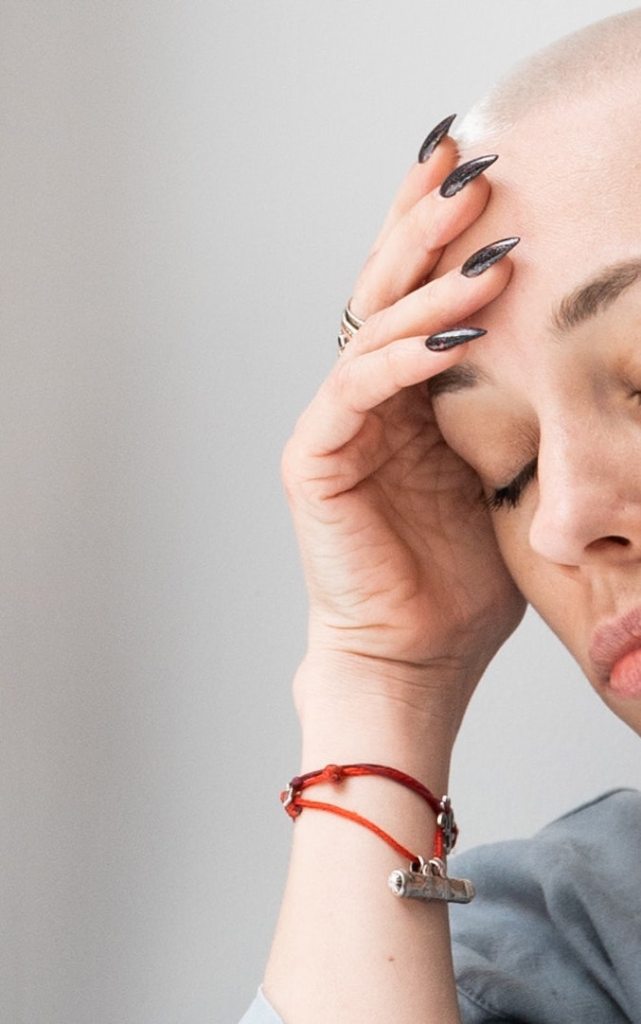
One such patient lost almost half of her face due to head and neck cancer. She came to the FNA clinic because of a tumor regrowth in her scar site. She was severely disfigured and shocking to see. She wore a hat and wrapped half her face with a scarf. She lived in fear that people would look at her with disbelief and disgust. She was in pain and shame. The extent people prefer to stay living by paying such a costly price is astonishing. Life is indeed priceless. She hesitated to show the lump or allow me to procure samples. As she began unwrapping her face and revealing her scar, she was crying. It was difficult to disguise the horror in my body language. I held her hand. She knew that I had my own sets of physical limitations and knew I had gone through emotional and mental pain not too dissimilar to hers. (I have polio on my right leg). There was unspoken language of understanding and compassion with each other. We had a special bond at that moment and there was a mutual understanding of enormous burdens we each carried in our daily lives. This kind of human understanding needs no words and felt between people who go through certain amounts of pain. After the procedure, I hugged her without a word. This patient helped me realize why I must suffer from my own physical limitations. From my new book, “Who says you have cancer?” available on Amazon.
Images of cancer patients courtesy of pixels-shvets-production
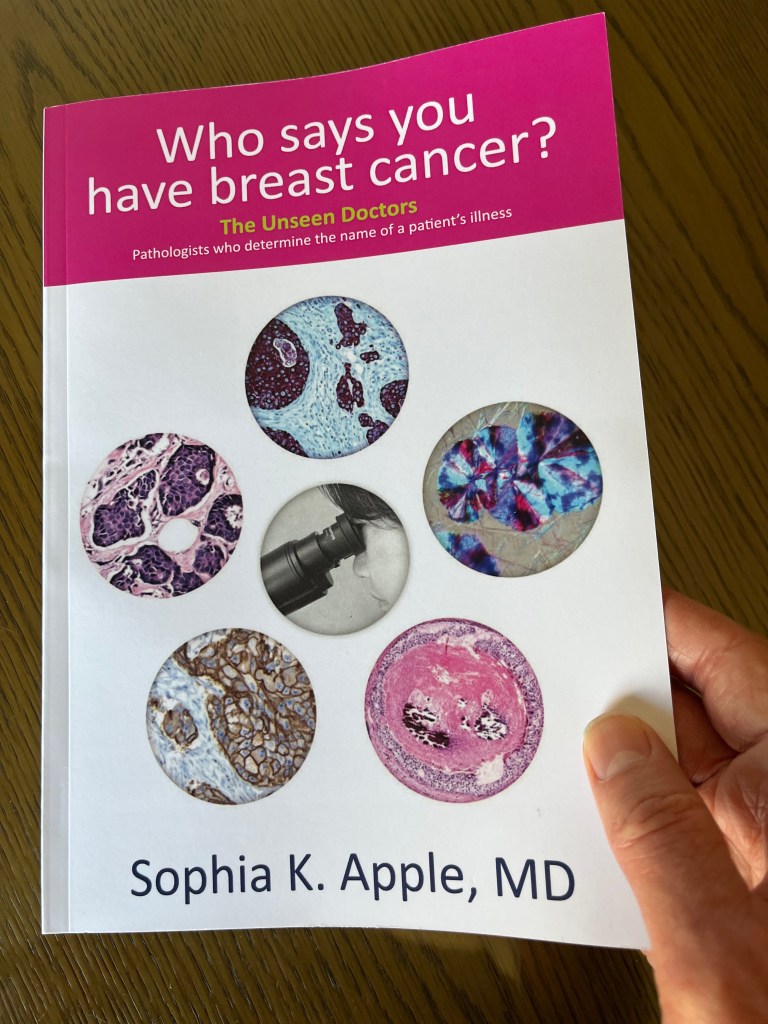
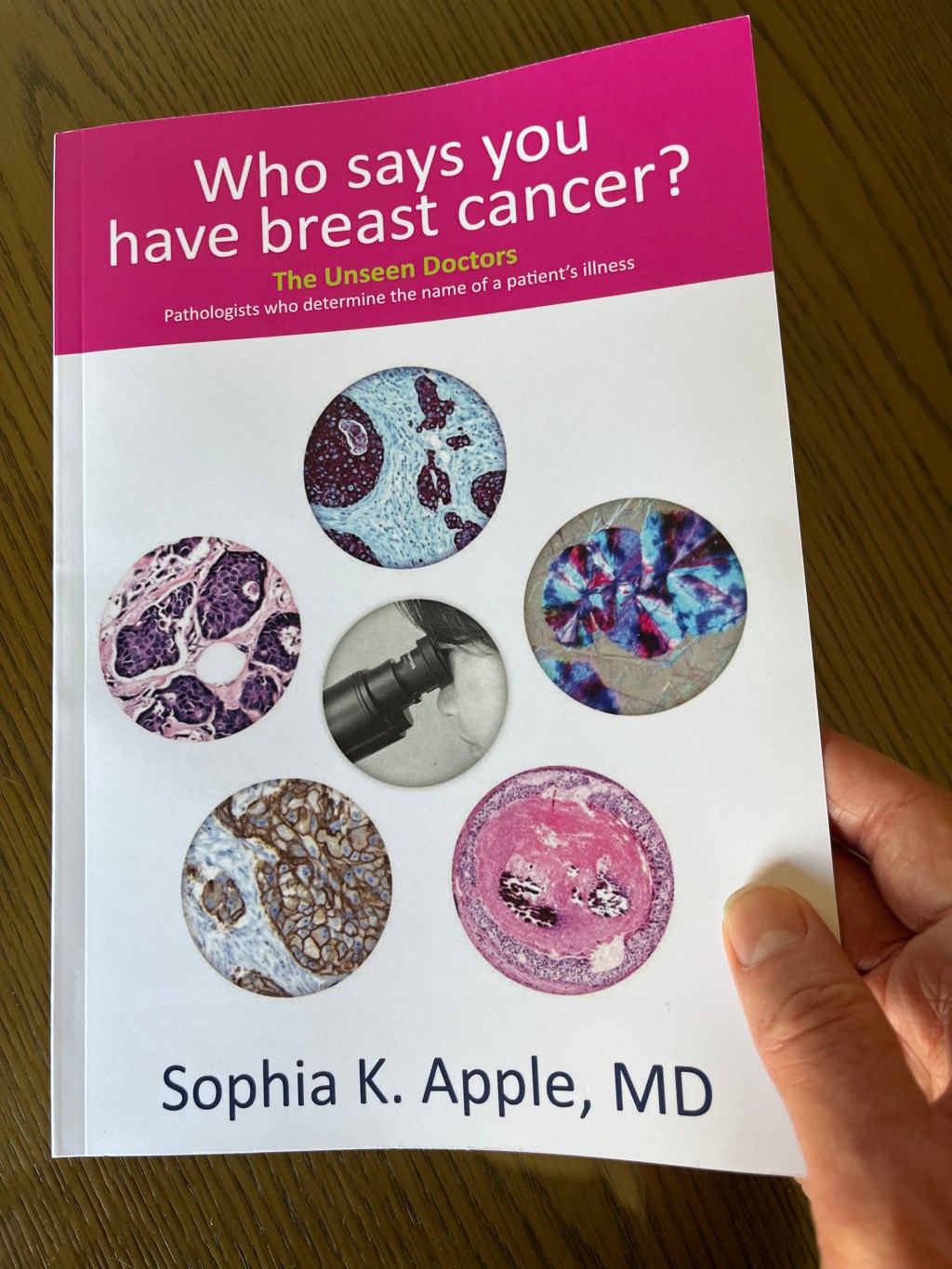
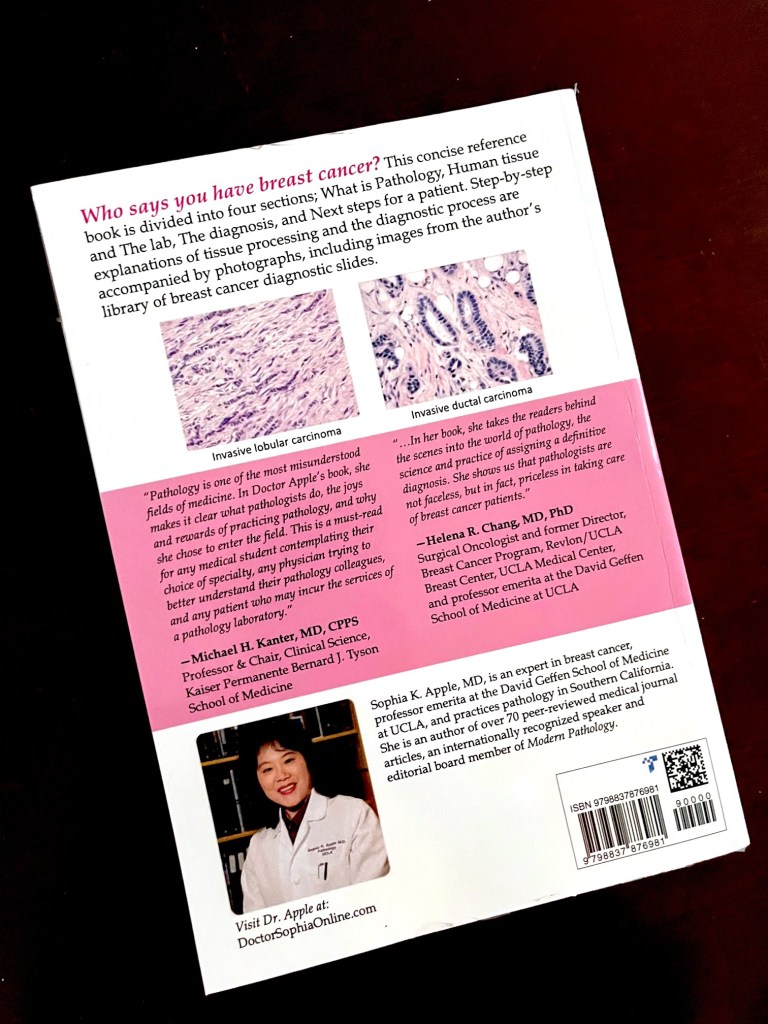
Only your pathologist determines the “final diagnosis” for a patient’s illness. This is the first medical book of its kind that describes pathology, the unseen doctors and workers who who are behind the scenes working for patients in every hospital. Dr. Apple donates all her book sale profits for those in need of a wheelchair through Joni and Friends, and those who lack access to food through the Valley Food Bank.
“Pathology is one of the most misunderstood fields of medicine. In Doctor Apple’s book, she makes it clear what pathologist do, the joys and rewards of practicing pathology, and why she choose to enter the field. This is a must-read for any medical student contemplating their choice of specialty, any physician trying to better understand their pathology colleagues, and any patient who may incur the services of a pathology laboratory.” —Michael H. Kanter, MD, CPPS, Professor and Chair, Clinical Science, Kaiser Permanente Bernard J. Tyson School of Medicine
Forgiveness and a metaphor from Italian medical history
Pacinian Corpuscle is a major tactile sensory mechanism in mammalian skin, discovered by Italian anatomist Filippo Pacini. It detects pressure changes and vibrations in the skin. When the external pressure such as touch is applied to the skin, it senses the vibration by deforming layers of lines until the nerve ending in the center processes the touch. The Pacinian corpuscle can be described as oval-cylindrical-shaped, 1 mm in length and consists of 20 to 60 concentric lamellae (like onion rings) connected by nerve endings at the center.
This microscopic image depicts the inner struggles we as humans experience via external stimuli, especially when it is negative. Natural reaction when the core of the structure is sensed as unfavorable is to recoil, retreat, shrink, flee, and finally fight if necessary.
Act of forgiveness, whether it is given or received, requires unnatural process of action. The power of the unnatural process of forgiveness is perhaps not possible by natural selection of human ability. God needs to intervene, so that humans can live peacefully with others and our own selves.
My male colleague once said, “Medicine used to be all men.”
Even now, certain specialties such as orthopedics and neurosurgery are pretty much exclusively men, secretly and sometimes outspokenly against women joining their exclusiveness. White older males perpetually dominate key positions in medicine, and their defense is, “Bring us the qualified women!” with no intention to hire a woman. How can women enter a leadership position when men are not providing opportunity into their exclusive club?
Women are “the other sex,” the “second sex,” the “sex to be further explained.” My anatomy training in medical school featured a male body. It is the model and norm. The study of entire organ systems modeled a male body in 90% of our anatomy studies and a woman’s body introduced as the “different reproduction system,” as if a woman’s breast, ovaries, fallopian tubes, uterus, cervix, vagina, and vulva are aberrant and complicated organs.
Researchers, usually males, further identify women with an ever-so-growing phenomenon of syndromes with mostly problematic connotations attached such as premenopausal (PMS), menopausal, superwomen, imposter, and battered women syndromes. The implication is that women are deficient and should measure up to what is considered “normal.”
This concept extends further by saying since women are hormonally dependent on their mood with a monthly cycling “problem.” Ironically, these speculations are tested to not be true that hormonal imbalance will lead to irrational behaviors. It places the burden of adjustment on women. Countless books and conferences have existed to “fix women” of their inferiorities while mostly men published lists of their problems. If women did not fit, it was their own fault.
A woman often faces a “double bind,” frowned upon for being too aggressive but weak if she is too sensitive or cries in public. What is wrong in showing emotion? Just because most white male leaders are stoic does not mean female leaders must act and dress like them and meet the same expectations in social behaviors.
Men are still the standard against which women are judged. A woman leader who acclimates well to the male norm of being outspoken, decisive, assertive, self-confident, independent, and courageous is often described as a “bitch” who lacks feminine qualities of kindness, consideration, warmth, pliability and her gaudy display of female emotions. No wonder many women struggle to find balance in the workplace as a leader. They have a double standard. The values of females become “deviant” when the measurement definition starts from males. No wonder why females often fail to measure up.
I define good leadership as:
excellent communication
sound decision-making
integrating connection
empathy
emotional cue-taking
consensus-building and
mutuality
However, these leadership values become misconstrued as a “less-than or weaker” leadership style which clashes with the dominant male culture of charismatic leadership, top-down authoritative style of leadership. This is reflective of our social and family culture; he respects his father’s authoritative voice, and he runs to his mother for consolation.
If the society’s value system were to flip and emphasize what is wrong with males, the problem lists might include an inflated or overly confident identity, unrealistic self-esteem, rigid and selfish, offensive sense of humor, insensitive, aloof, autonomous, uncooperative, angry, linear in thinking and a pathologic inhibition to express their emotion, suppression of pain, guilt, shame, remorse and fear of losing control.
Currently, women outnumber men in college and medical schools—they account for about 55%. Women tend to have higher grades and drop out less frequently than men. Yet according to a study sponsored by the Rockefeller Foundation, women hold only 4% of leadership positions in Fortune 500 companies.
I became a leader physician believing that the mission is to serve patients by offering excellent care, to transform health care by innovative research, and to teach the next generation with knowledge, transparency, and compassion. The mission is clear which both genders are equally capable to achieve. But I came to realize throughout the centuries, women are seldom seen as chairman of the department, chef, conductor, pilot, president, CEO, dean, astronaut, ship captain, sports coach or any other visible leadership position. Women do not need affirmative action requiring women in leadership positions to fulfill an institution’s public image, and to meet a diversity quota. We do not want the job as a leader for the social sympathy and endure suspicion that we are in the “inclusive program project.” We want to be a leader based on merit and talent. As Ruth Bader Ginsburg said, “I ask no favor for my sex. All I ask of our brethren is that they take their feet off our necks.”
Women doctors share inspirational and heroic stories to successfully navigate sexism or discrimination in medicine, overcome impostor syndrome, or powerfully stand up for equity.
All of these stories are empowering and inspirational. But this too is measuring up to someone else’s standard; a mere illusion of being the winner. In truth, there are no winners or losers. No tombstones ever mention how much one worked and stood up for inequality. The writing merely says BELOVED WIFE, or MOTHER.
In the end, it is about who you loved and who loved you when you lived in this place called earth.
Being truthful to oneself and living comfortable in one’s skin in honesty may be the most heroic and meaningful story.
Read more about women in medicine in my new book, FORGIVE TO LIVE.












 The Unseen Doctor